My 3 Cut Loose Press Patterns

It’s hard to squish and streamline quilt pattern instructions down to one and a half pages including diagrams, but I have done it! I have 3 patterns with Cut Loose Press. You may know them from your local quilt store. Cut Loose Press publishes patterns featuring the Creative Grids Rulers and Tools. My three patterns are all written for the same tool that I have taught and demonstrated for years – the Straight Out of Line tool. I mean, I sold SO MANY OF THAT TOOL that I feel a PERSONAL RESPONSIBILITY to provide y’all with ways you can use them! Truthfully it’s a VERY USEFUL template. You can get half tumblers, “Twister” style blocks, and optical illusion-esque blocks out of it all in multiple sizes (13 sizes). I expect to just keep adding to the arsenal of patterns for this – I have a couple in my back pocket right now.

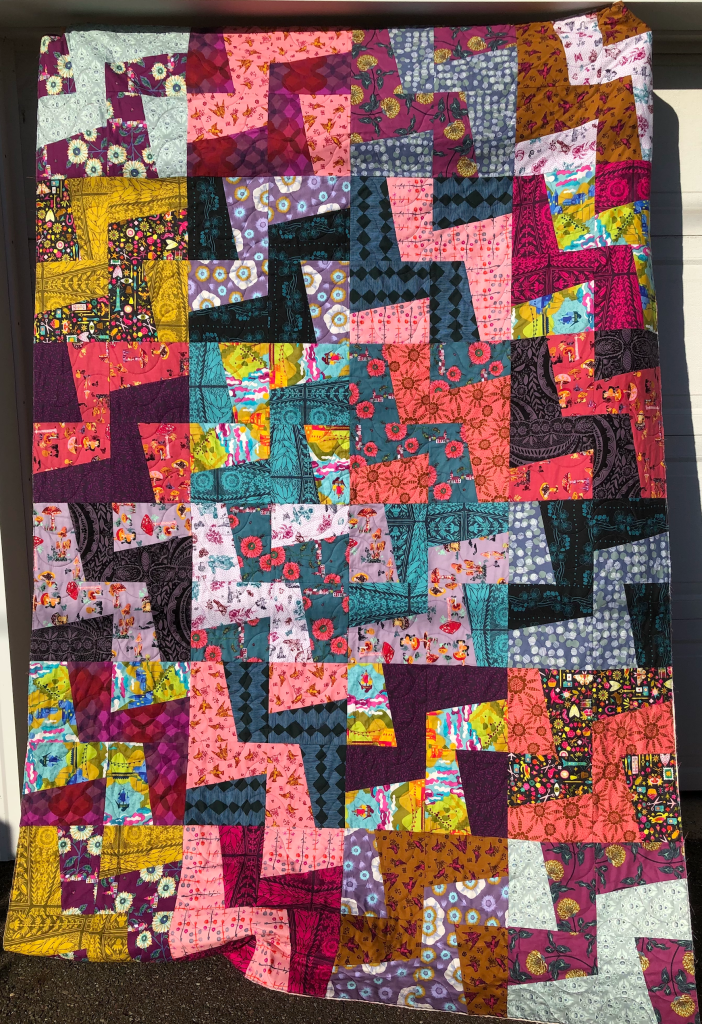
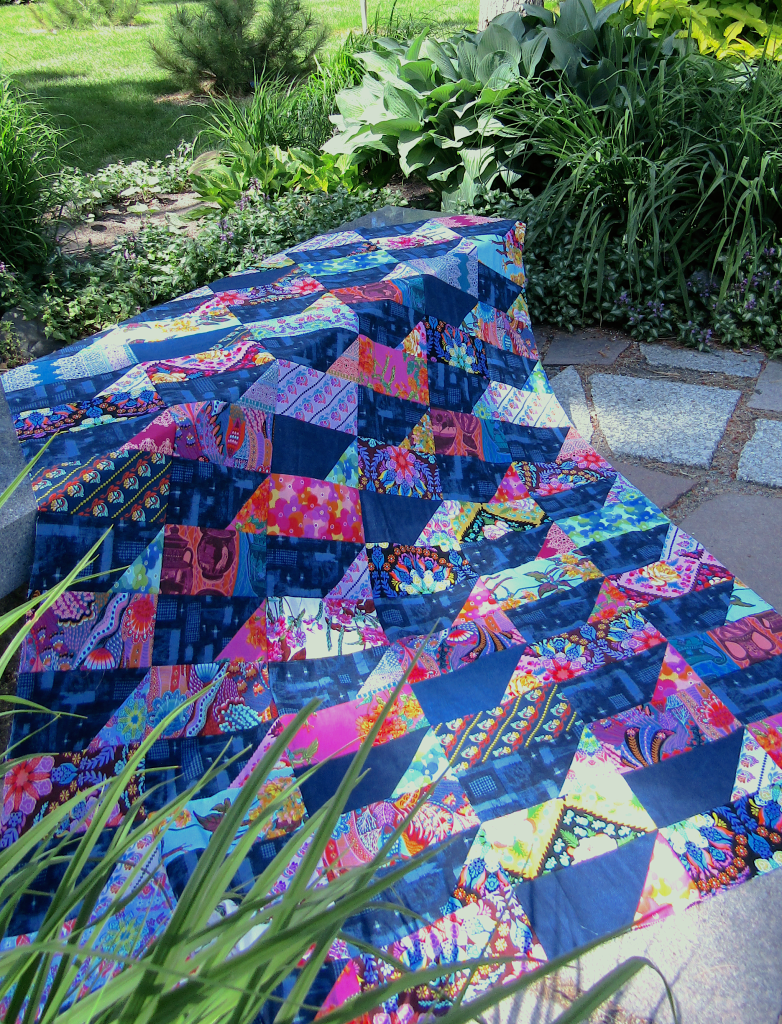
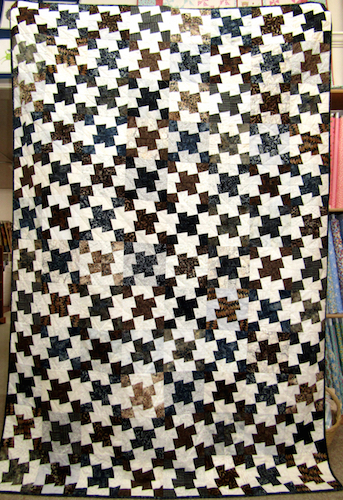
My Shindig Quilt pattern pictured left is the place to start when you buy the Straight Out Of Line tool. Shindig is extremely beginner friendly and you also get some practice sewing on bias edges and putting the wedge shapes together. Buy a couple of Layer cakes and you can whip up this quilt so fast it’ll make your head spin!


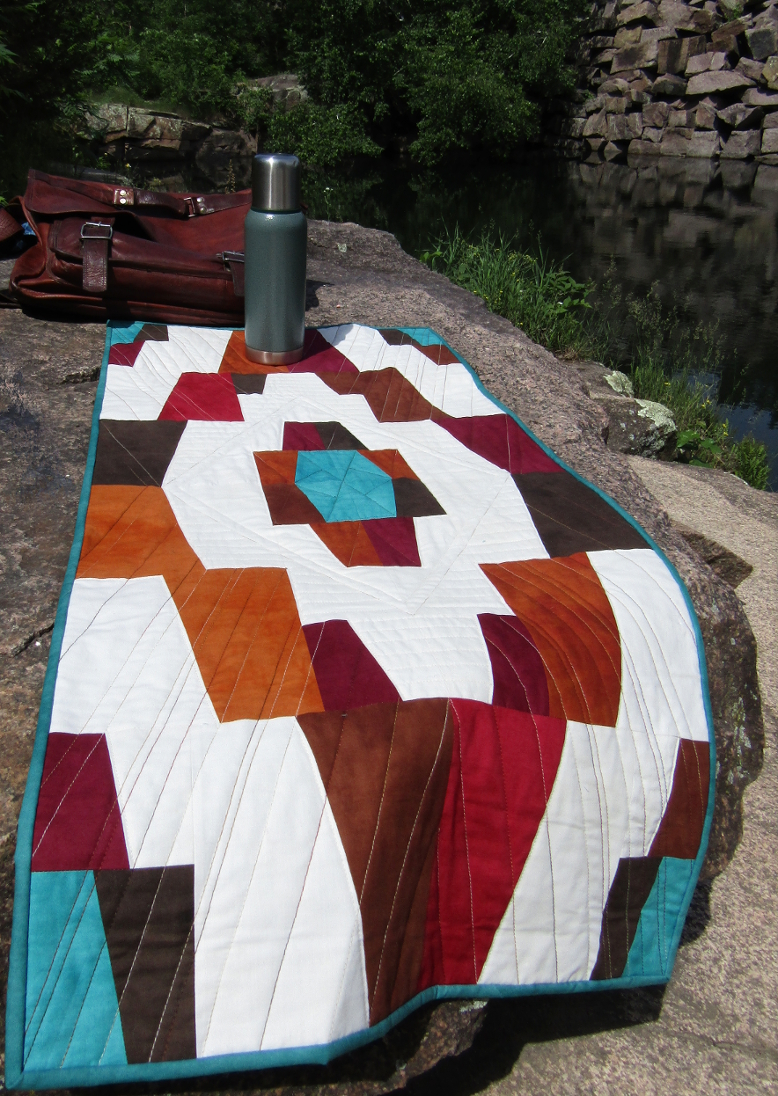
My second pattern is the Medora Table Runner. It’s a similar block to my Medora quilt but I stretched it out to make it a better runner size though it’s still large-ish at 19 1/2in x 42 1/2in. I’ll say it again, “It’s hard to squish and streamline instructions down to one and a half pages including diagrams!” Having taught this pattern a number of times I will forewarn you, your scant quarter-inch seam allowance must be scant. Maybe even super-scant. But makers have been making this for several years and I’ve seen it done beautifully in batiks and Holiday fabrics and more.

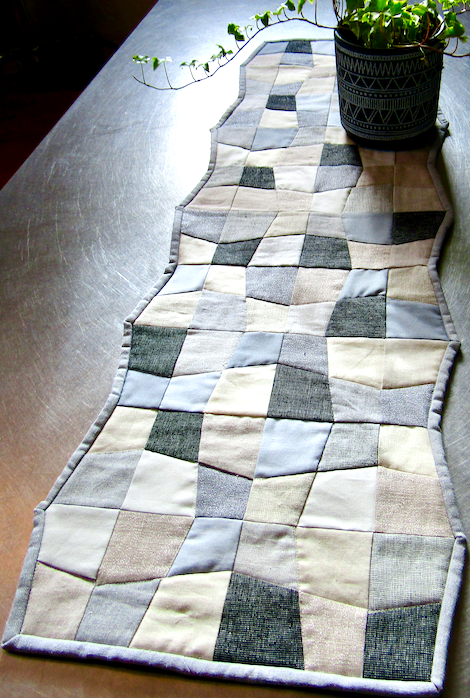
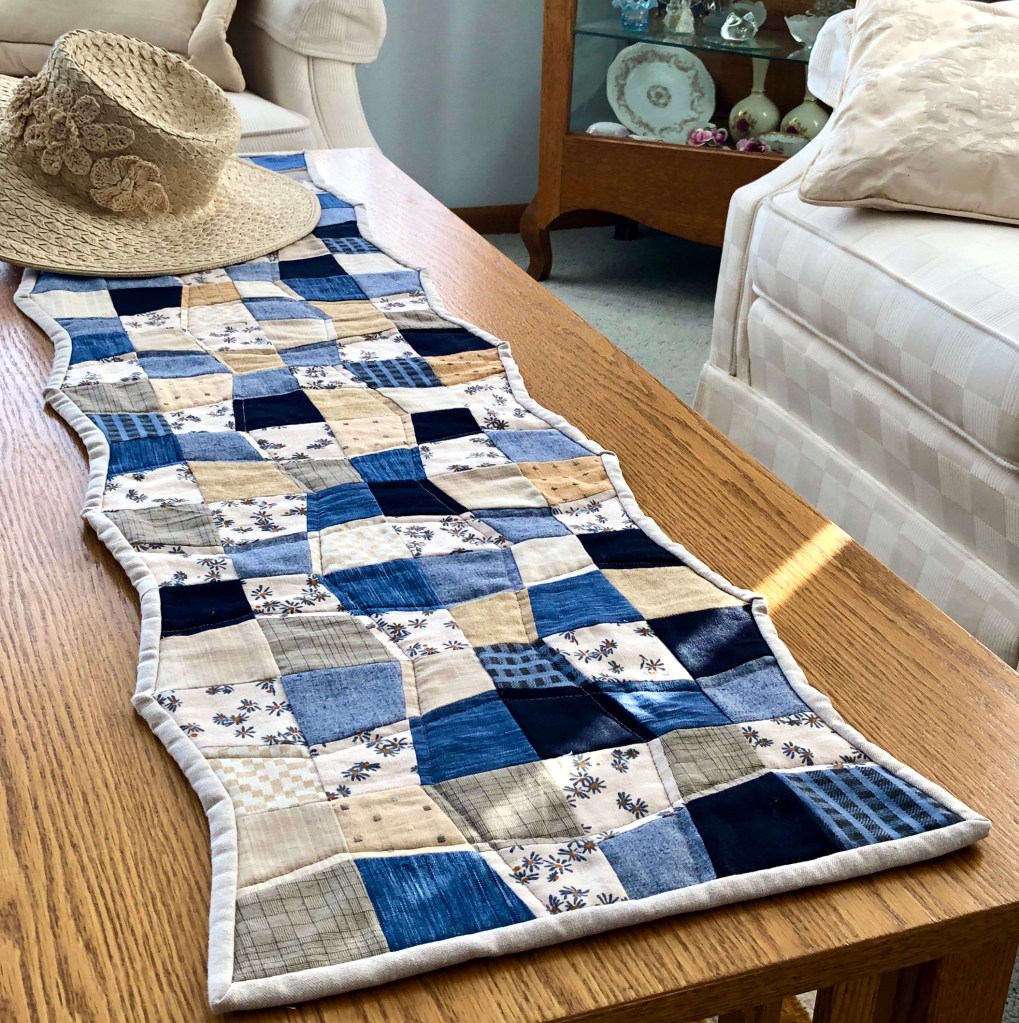
Third and most recent is my Flexible Floe Table Runner. I personally think this one is best in a limited palette, like all neutrals ranging from dark to light, or all blues ranging from dark to light, or maybe 2 colors like blue and yellow and again ranging in dark to light but prove me wrong! please!

Here it is in a bunch of Essex Linen blends by Robert Kaufman fabrics with some golds from Diamond Textiles wovens, an old chambray remnant, and I threw in a couple of Ruby Star Society Warp and Weft fabrics that worked too!

Don’t let the angled binding scare you! You do the outer corners similarly to the right angles on a quilt and the inner corners are gentle so you just pull the runner so the inner edge gets straightened and then continue along. Krista Moser has a good tutorial about doing inner angle bindings on YouTube.

Support your Local Quilt Store and pick these up from them!

Medora Quilt pattern – correction

If you purchased one of the original Medora Quilt patterns that requires the Straight Out of Line ruler either directly from me or from Gruber’s Quilt Shop, there are NO Corrections. However, you might want to contact me because I added a Queen size quilt layout to it and I’d be happy to share that with you for supporting me early on!

If you purchased a Medora Quilt pattern sometime between June of 2024 and April 30 2025 there is a correction.

On Page 4 of 12, the 5th set of “Stitch” instructions below the dogear illustration should read:
“Stitch [ 10 | 12 | 20 ] regular and [ 10 | 12 | 20 ] mirror Color C 4” wedges to [ 10 | 12 | 20 ] reg. and [ 10 | 12 | 20 ] mirror CENTER COLOR 4” wedges.”

Don’t sew Color C wedges to Color C wedges…

ALSO this instruction has been added back in on Page 5 (it may have been accidentally deleted at some point? sometimes my cat jumps on my keyboard when I’m not around…?!?)

Stitch [ 8 | 12 | 20 ] regular and [ 8 | 12 | 20 ] mirror Color B 4” wedges to [ 8 | 12 | 20 ] reg. and [ 8 | 12 | 20 ] mirror Background 4” wedges.

The above changes are now in the PDF file as of 05/01/2025 so if you purchased the pattern from my Etsy shop, you can simply go back to your Downloads and Download the PDF with the corrections.

I’m sorry for any confusion!
Thank you and happy quilting!

Super Bloom Wreath pattern

I’m releasing another pattern: Super Bloom Wreath! If you’re familiar with the quilting year, you know it’s about time to start Yule/Christmas/Northern Hemisphere Winter projects if you want them done by Christmas or Boxing Day or the Winter Solstice or what-have-you. I made this 42″ wreath (but you can also make it half size) because I could make it these bright reds and oranges to cheer me up when the days get short. Of course as with all things quilty, you can make a Fall Wreath, a Halloween Wreath, a Thanksgiving Wreath, an Easter Wreath, or whatever wreath you want just by changing the fabrics. The 42″ size makes a wonderful baby quilt too and because of the larger size of pieces you can use flannel. Just think about plunking that cutie down in the middle of the wreath! great photo op!

This pattern is also a really good introduction to 60 degree shapes: equilateral triangles, half hexagons, and diamonds. I have a ton of diagrams. The cutting diagrams are focused on the CGR60DIA 60 Degree Diamond ruler but this wreath can absolutely be made cutting using a different tool. If you use a different tool, I’d recommend testing with scraps to make sure you know the tool well. I didn’t do templates. Too often people print the templates at the wrong size and then pieces don’t go together properly. I mean, email me if you think I’m wrong, I’d love to hear your views. jill at materiella dot com

I’d like to see a good rainbow version of this. I’ve tried a couple of times but I don’t think I’ve quite got it with the fabrics from my stash. Technically this one has all the colors of the rainbow but it doesn’t exactly hit you over the head with RAINBOW either…

Also, did you know? A superbloom is a rare desert botanical phenomenon in California and Arizona in which an unusually high proportion of wildflowers whose seeds have lain dormant in desert soil germinate and blossom at roughly the same time. The phenomenon is associated with an unusually wet rainy season. It’s amazing!

Grab a pattern and make it in your own favorite colors!

Missouri Breaks Quilt Pattern: 6 Sizes – Beginner Friendly Instructions

New Pattern Alert!
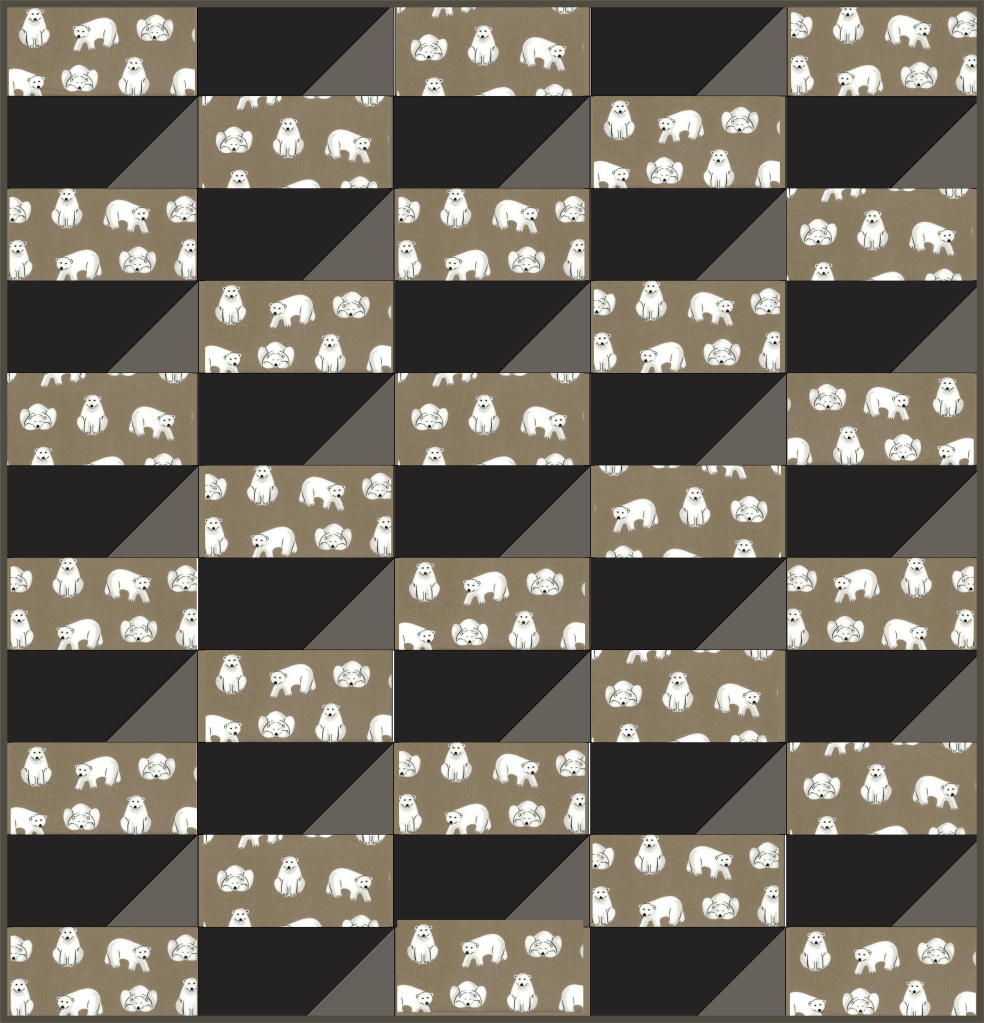
The Missouri Breaks Quilt Pattern is a beginner friendly quilt pattern with detailed instructions and diagrams. You have a choice of 6 different sizes each time you make it! A baby quilt (the 3 yard quilt version), a large throw quilt (the 6 yard quilt version), and a queen size quilt made from yardage or a crib quilt, a throw quilt, or a queen quilt made from layer cakes (10″ square fabric packs) and yardage for the background fabric. If you cut 10″ square with your leftovers, this is a good stash buster too. Because of the size of the blocks and the pressing instructions, this is a wonderful quilt to make with your favorite cozy flannels too.

Get it FREE by signing up for my Newsletter. Then please make a bunch of quilts and donate them to groups that will give them to LA fire survivors, or Hurricane Helene Survivors who still need items. Please make sure to check your various email folders in the week following your signup in case the email goes to your spam folder.

Subscribe

Enter your email below to receive updates.


Thank you so much!

Here’s my plan for a flannel – well actually the black will be a piece of corduroy remnant from my mother’s old fabric stash but the others are flannels I already have:

My friends at The Bundle Barn site made an oh so pretty version with Art Gallery fabrics and a turquoise grunge:

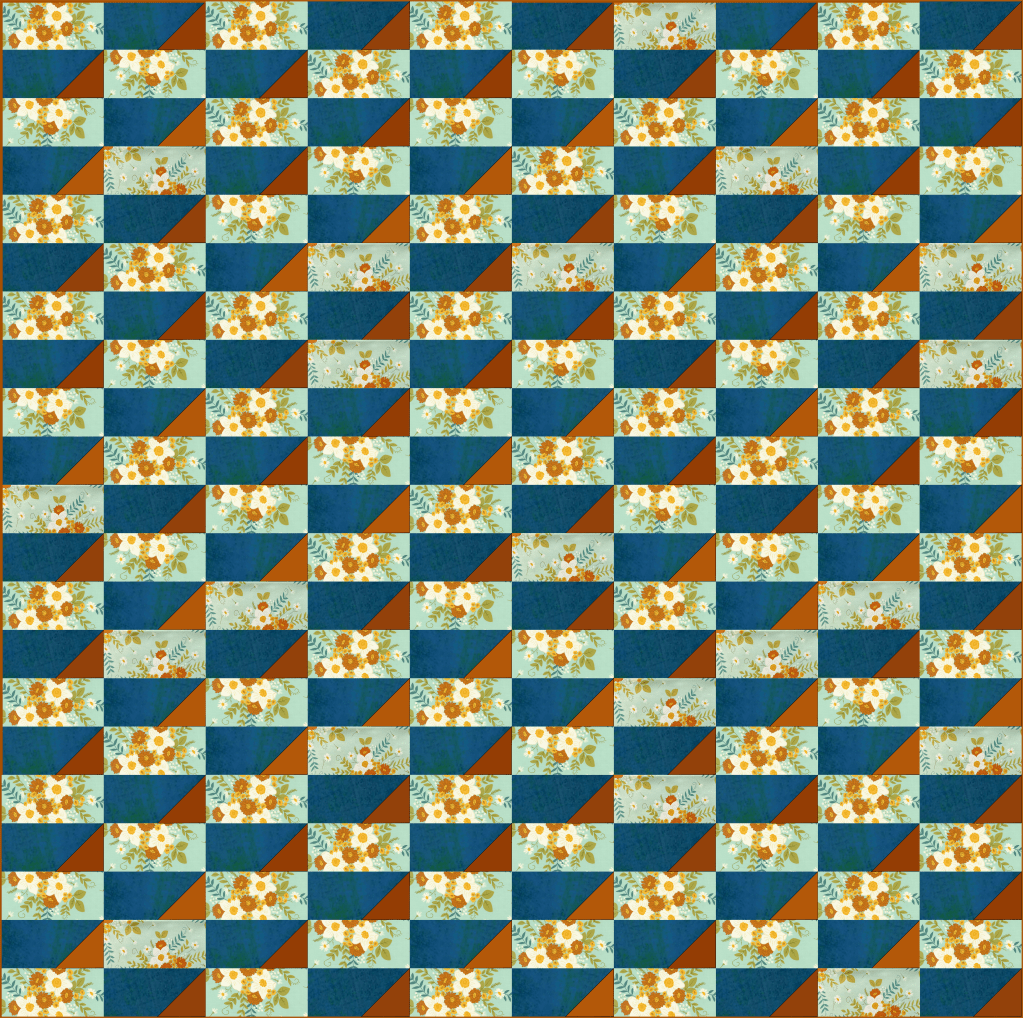
and here’s a mock up of a ginormous queen size with just three fabrics (me, I’d do it scrappier but sometimes you want to make a quilt out of specific fabrics for a specific person, right?)

If you’re curious, I named it for the repeating Geological feature along the Upper Missouri River. Where the river cuts into the prairie, there are areas of regular little valleys in the banks that then flatten out at the top on the grasslands. So even though my pattern has way more repeats, you can see my inspiration in this picture:

Also, it’s summer of 2024 and I have multiple other patterns I’m releasing on a quick schedule here so stay tuned…

The Sampler Book is Here!

It’s back from the printer and it’s available at Gruber’s Quilt Shop!

For the time being I’m selling “Know Them, Raise Them, Be Them: 20 Quilt Blocks for 20 Amazing Women” through my Local Quilt Shop. We need to keep brick and mortar stores alive so please support them by purchasing through them. They’ll ship it out to you in a jiffy.

Thank you!

Millennium Falcon Patchwork Block

MillenialFalcons

Or as a young co-worker of mine said, “I don’t know what a Millenial Falcon is.” aaawwww… I gave her a fist bump. Should I just call it a “Rebel Spaceship” block? I mean, am I going to get sued? ok, *what*ever… It’s a humble little block in homage to one of our favorite scifi/family-problems drama series, right? Also, Han is hot.

For this block, you’ll need a 45 degree ruler or template. The body of the Millennium Falcon is basically a classic kaleidoscope/octagon quilt block. My favorite ruler for this is Creative Grids’ Spider Web ruler by Karla Alexander. Admittedly, I’m generally a fan of her rulers as she makes an effort to indicate so many cutting options and sizes, always, *and* in such a way that you don’t end up with bias edges on the outside of your blocks (more about that at a later date). When you cut your triangles, the ruler has a little black triangle marking at its tip that extends beyond your fabric strip – indicated with the lime green circle here (some might call this a “smart corner”):

SpiderWebRulerTip

Maybe you have a different ruler. The Squedge 45 degree ruler has a flat top that will line up with the top of a rectangle or strip as does the smaller Creative Grids Kaleidoscope and Dresden 45 degree ruler, CGRTKAL45. If you use another 45 degree or kaleidoscope ruler that includes the triangle tip but it’s not blacked out or marked in some way to eliminate the excess fabric, you will need to cut your kaleidoscope triangles at 4 ⅞” (or even 5″ but you’ll trim more) when the sharpest point is included.

I used up scraps for my fabrics and even did a block with mostly upcycled shirts from my father and from my husband. Since Star Wars is at least in part about father *and* husband issues, I think it’s appropriate! You could easily get the (8) kaleidoscope triangles out of a fat quarter but I’d recommend pulling scraps – a single 5″ by 4 ¼” rectangle would give you one kaleidoscope triangle, a 4 ½” tall strip (as in my picture above) longer than 4 ¼” will get you more triangles. If you can throw in some red bits at the tips of your triangles too, the original Millennium Falcon does have some red panels on its hull but I did not include specific directions for those.

I also use Karla’s Straight Out of Line ruler to make the wedge blocks here. It’s a gentle angle and could be done without the ruler but I like the consistency of having a ruler – I’m much less likely to mess up my cuts.

A scant ¼” seam allowance is what I want you working with here. This means your needle and therefore your seam will fall at *not quite* a quarter of an inch. Your seam should be a thread or two less than a quarter inch. This way when you press open, material that is lost in the fold (it is just the mechanics of it) will not impact your final size.

Fabrics and cuts:

(8) 45 degree triangles from lights/grays, 4 ½” tall with flat top, 4 ⅞” with point

(2) 3 ¾” squares of black or darks, cut once diagonally to make a total of (4) half square triangles

(2) 4 ½” squares of lights/grays* for wedges/”mandibles”

(2) 4 ½” squares blacks/darks* for wedges

(1) 2” square light/gray

(1) 2″ x 3″ dark rectangle

(1) 2 ¼” square light/gray

Assembly:

Piece your (8) 45 degree triangles into a kaleidoscope center. I usually do (4) pairs proceeding around the kaleidoscope, then pairs of pairs to get half the kaleidoscope, then the (2) halves together.

Each half should have a good ¼” seam allowance above the points. Here’s a pretty good one:

QrtrInchSeamKaleidHalf

I press in one direction around my kaleidoscope. Here’s the back of the same half:

KaleidHalfBack.JPG

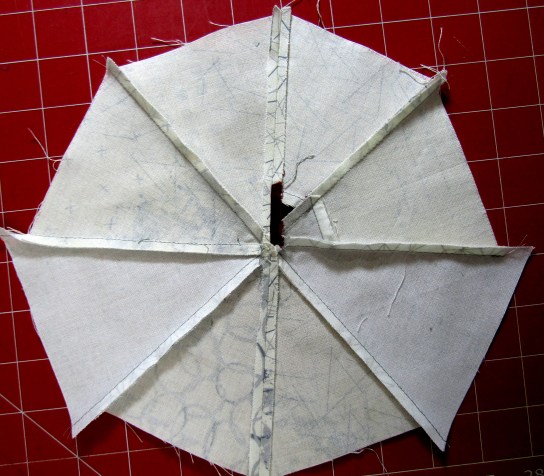
Sew the (2) halves together to create your octagon/kaleidoscope. I press this seam open:
BackKaleidWhole.JPG

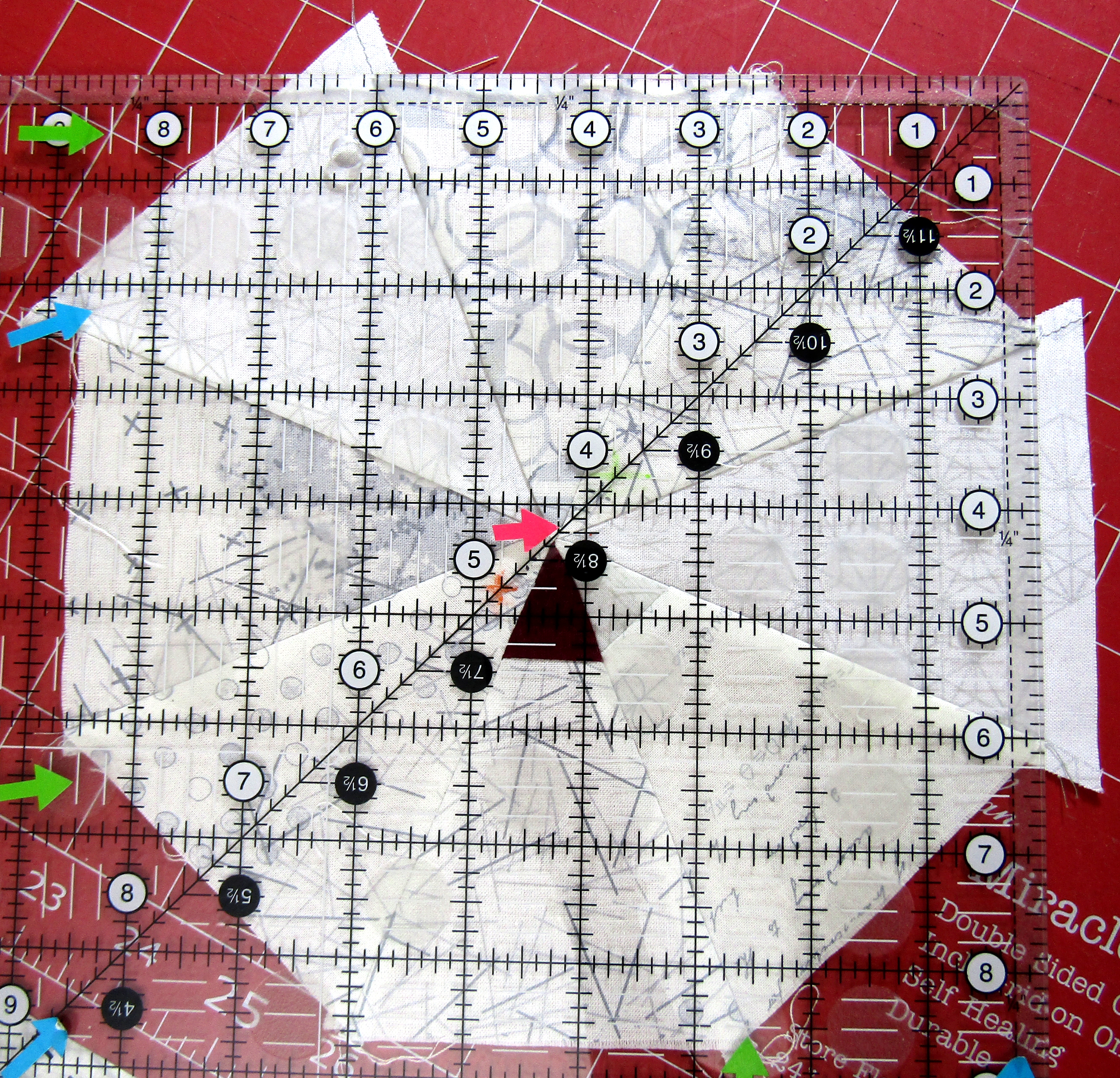
“Square” the octagon (Octagon the octagon?) at 8 ½” wide all the way around. Your 4 ¼” point should be roughly the center from both directions as indicated with the pink arrow. I made a couple of my 45 degree triangles from 5″ strips so I have more to trim off of those but even the triangles made from 4 ½” tall strips or pieces may have a little to trim off. :
SquareKaleido8pt5.JPG

Decide on the orientation of the MF’s (Millennium Falcon’s!) main body, sew a black half square triangle to each of the upper-left, lower-left, and lower right corners.

Take your 2 ¼” light square and place it right sides together with the last black half square triangle, lining up at the square corner of the black/dark triangle. Stitch your ¼” seam as indicated:
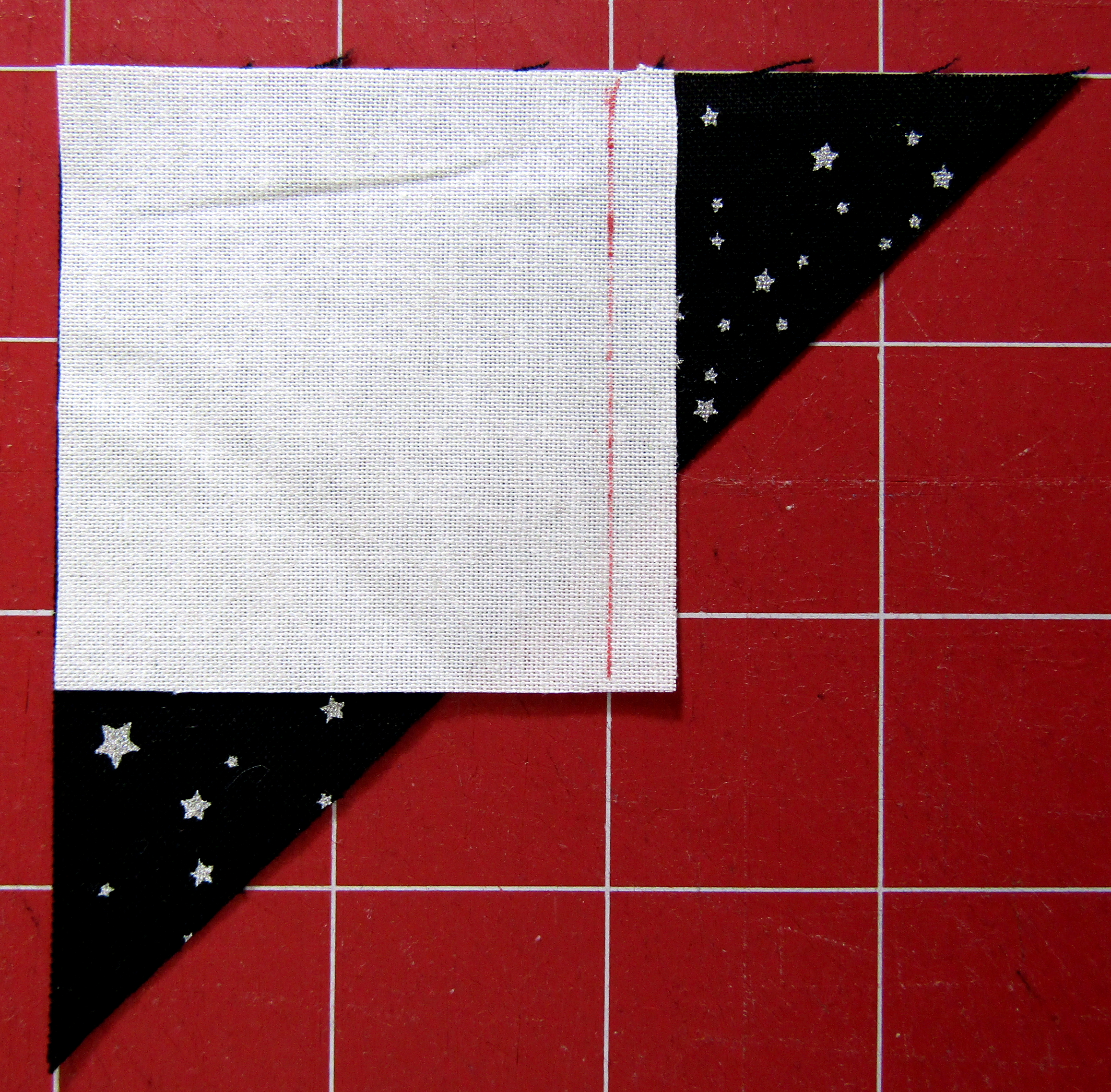
CockpitTriangle.JPG

Press this unit open, trim away the excess light and dark to make a half square triangle again the same size as the original dark triangle was. Sew it to the last remaining corner of the MF, the upper right, to get your “cockpit” corner.

Trim ¾” from the front edge of the MF (where the “mandibles” or wedge pieces will be sticking out) , like so:
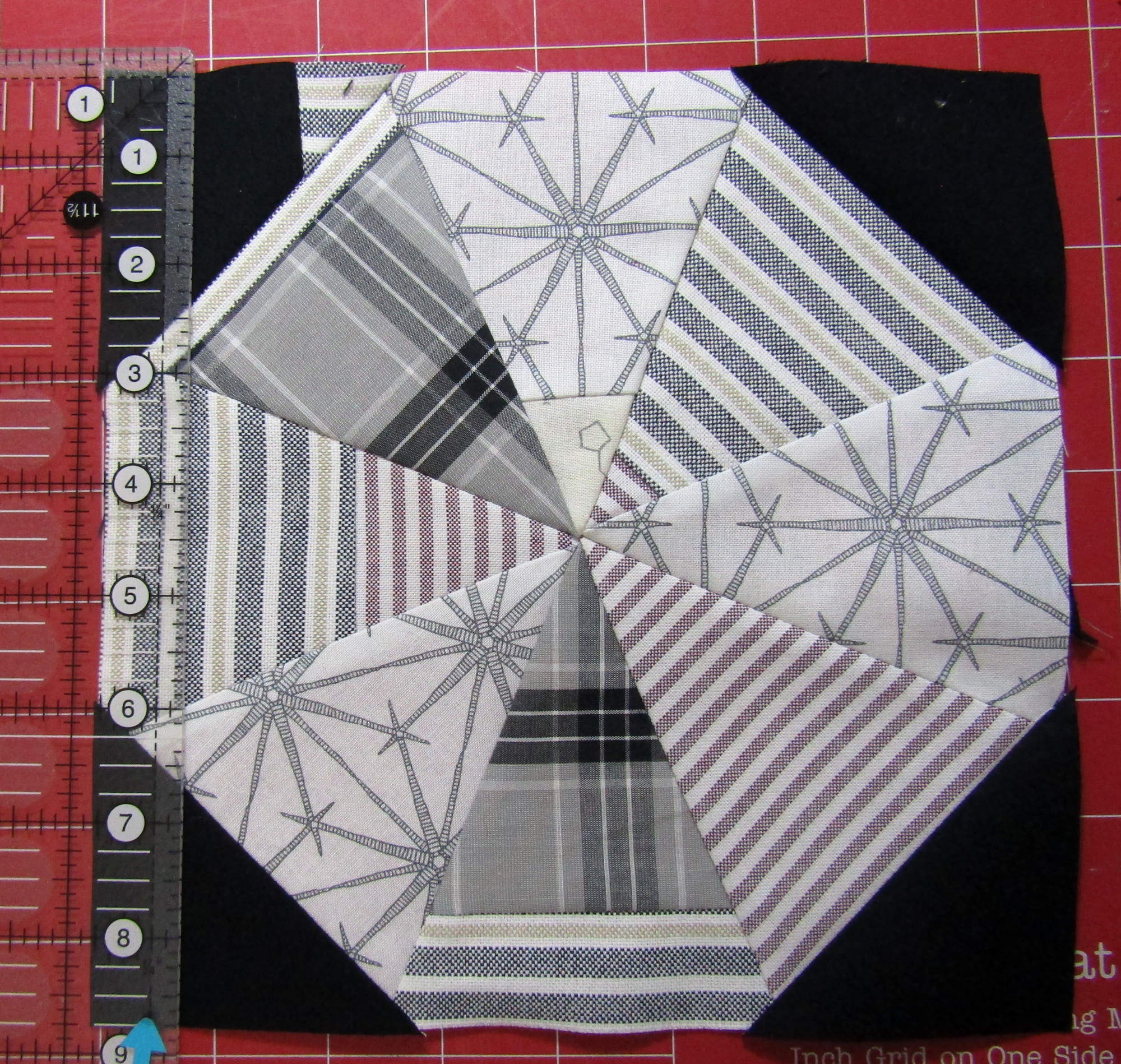
TrimBodyMF

Cut (1) light 4 ½” square into 2 wedges using the Straight Out of Line ruler (alternately cut across the middle of the square at a slight diagonal, not a deep angle) and flip the other light 4 ½” square upside down and cut it into 2 wedges to get your reverse or “mirror” cut wedges also either with the ruler or with a gentle angle using a straight ruler. (* This is where if you are using solids or wovens or other fabric that is easily reversible as some batiks are, you will only need (1) 4 ½” square each of light and dark because you can just flip your wedges into whatever orientation you need.) Repeat with your dark 4 ½” squares.

mirroredWedges

Sew (1) light wedge and (1) dark wedge together to form one mandible unit and (1) mirror light wedge and (1) mirror dark wedge to get your other mandible unit. When you put your wedges right sides together along the angled edge, there will be small dog ears at the ends and they should meet where your quarter inch seam allowance will fall:

dogearIllus

When pressed open, your mandibles should basically look like this:
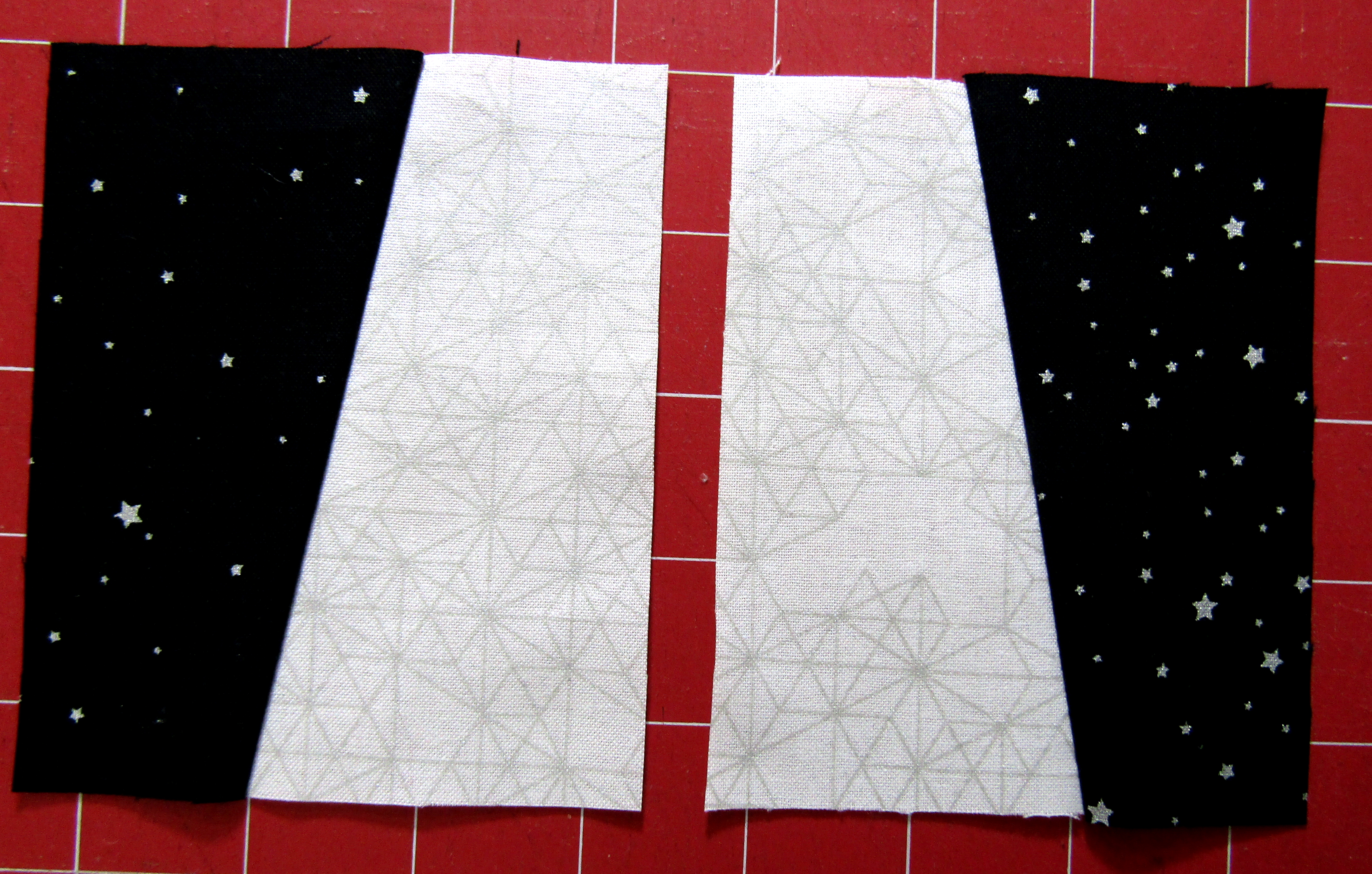
MFMandibles.JPG

Trim each of these units, by taking off some of the long edge of the light wedge, to 3 ¾” wide (they should still be 4 ½” tall but if not, trim each of them to be the same height also, 4 ⅛” or 4″ tall will be okay, it will just change your final size):
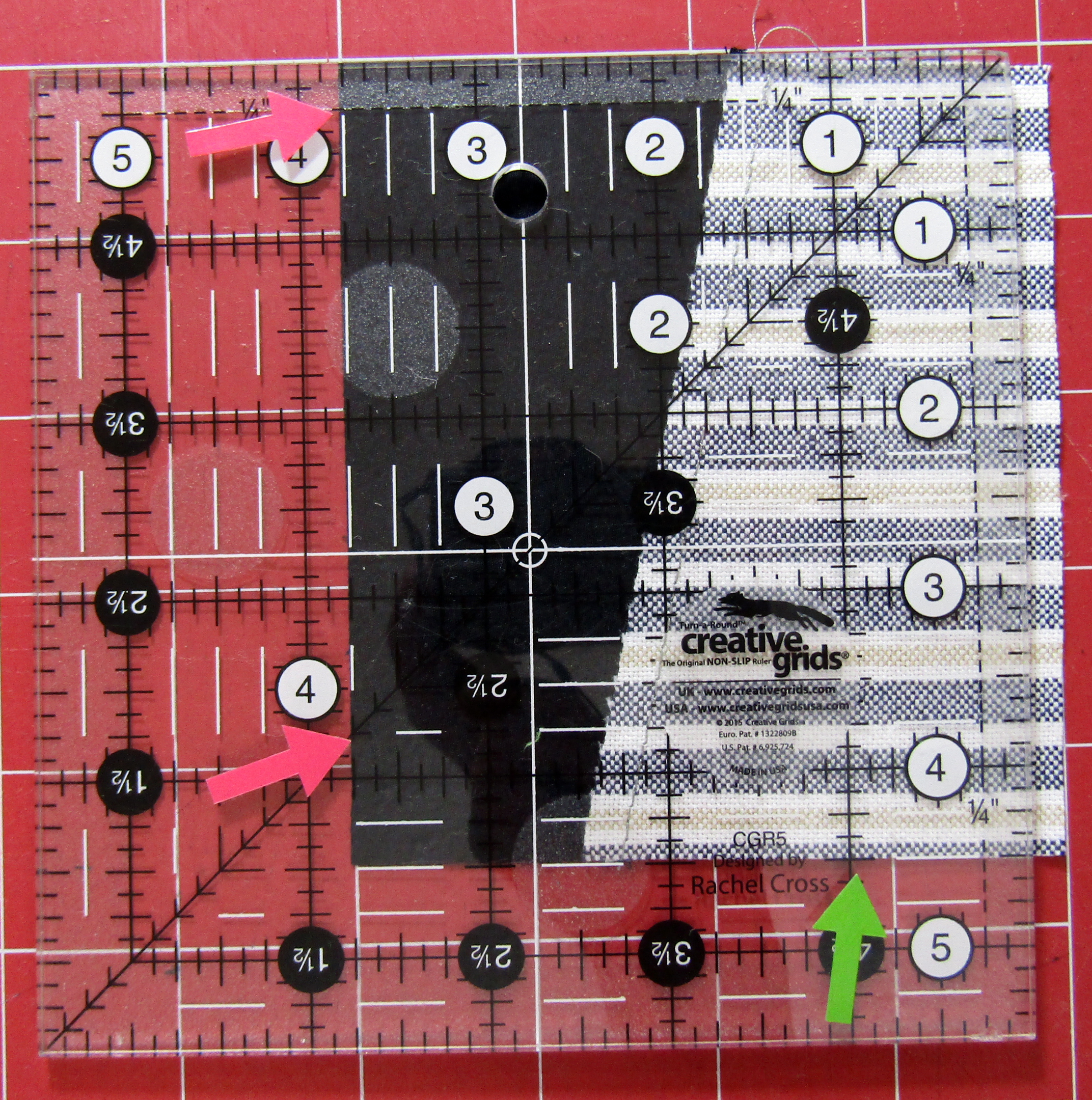
TrimMandible

Sew your 2” square light/gray to your 2″ x 3″ dark rectangle to get a 4 ½” long piece to go between the mandibles. If your mandible blocks are shorter than 4 ½”, just trim this long piece to be the same length, taking a little off both ends as needed to get the right proportion.

Stitch this last strip to the long light edge of a mandible unit, then stitch on the other mandible unit. Take care to make sure when you open everybody up they are oriented this way:

MandibleUnit.JPG

(I noticed these same shapes in Jurassic Park last night.)

Lastly, sew this mandible unit to the front of the body unit to make your completed Patchwork Millennium Falcon! It should measure 8 ½” wide by 11 ½” tall unless your mandibles were a little shorter… This one’s my upcycled one which I *do* really love the striped fabrics in it.

UpcycledMillenialFalcon.JPG

Feel free to send me your questions and comments at jill [at] materiella.com

Check out the patterns I have for sale at my etsy shop: https://www.etsy.com/shop/MateriellaDesigns/

Thanks!

Fastest Seam Ripping in the West!

Did you know a seam ripper could be used this way?!? I had *no* idea until my boss showed me one day a couple years ago at the shop. I used to pick out every 3rd or 4th stitch – So SLOW!! This is so much better when I have to unsew a 90″ seam or something. Obviously, be careful because as with *most* sewing tools, there is some danger, but I haven’t poked myself or ripped any fabric yet. Happy Sewing!


Making Antelope Canyon Quilt

Quilt Nerd Alert!

AntCynFlimsy
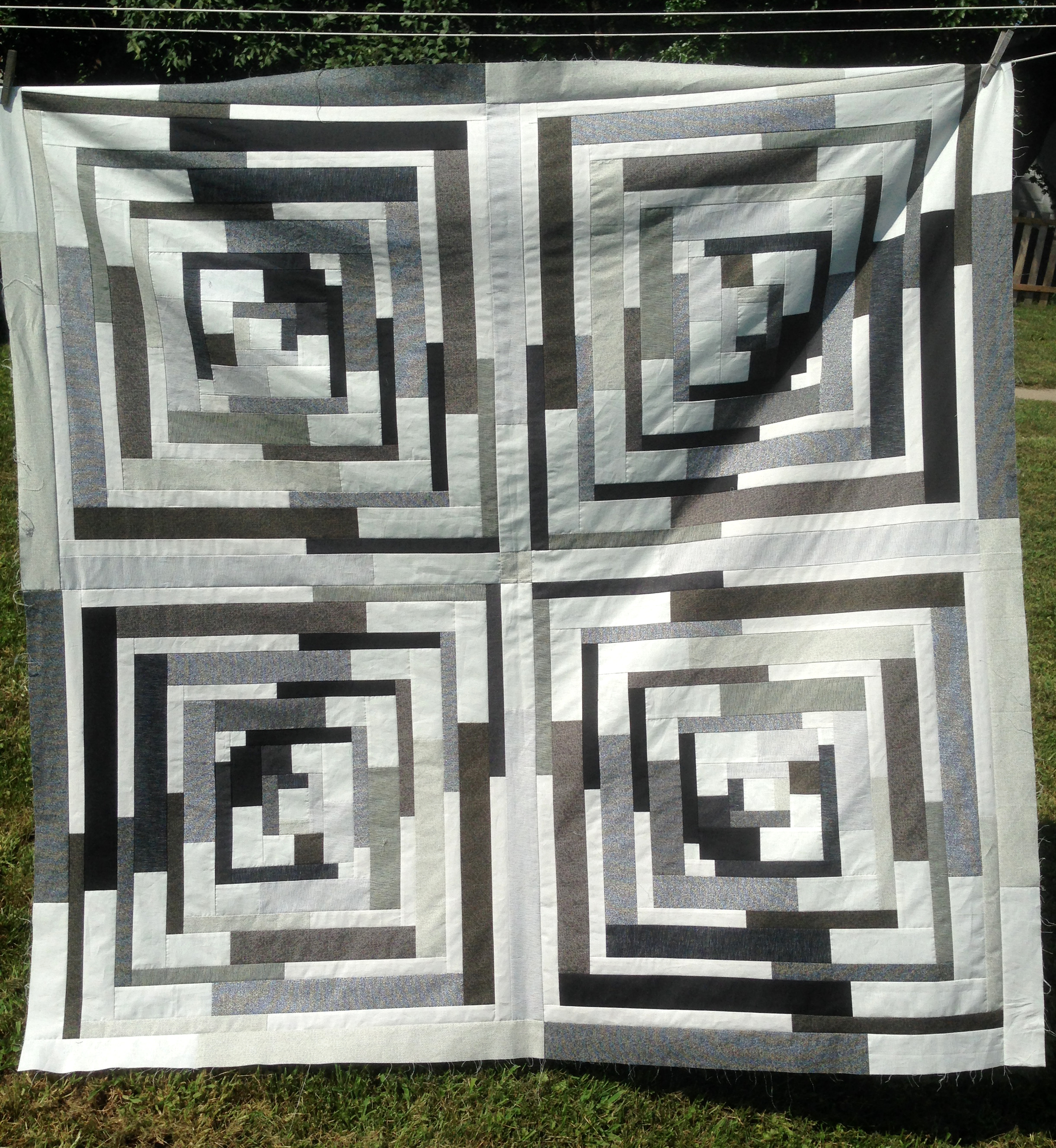
My Antelope Canyon flimsy

The first time I saw Laurie Schifrin’s “Antelope Canyon” quilt I was struck by it. I collected as many photos of it that I could find – which isn’t very many as far as I’m concerned, get your finished quilt photos out there people! – and I marvelled at how the different colorways and value settings change its look. OK, that’s true of most quilts but Antelope Canyon has such GIANT blocks that it really gives you a bold modern graphic, even some optical illusion potential.

When Gruber’s Quilt Shop needed a model of it made – and I just happened to clerk there a few times a week – I signed up for it. They have the version for the “Texture Graphix” line of fabrics by Jason Yenter for In the Beginning fabrics. I am spelling that all out for you because I just helped open and shelve a *new* line of Texture Graphix by Jason Yenter in starker whites, blacks, and greys and they would ALSO make a great Antelope Canyon quilt! or any quilt – they’re just gorgeous.  Of course, Laurie Schifrin’s already done another cool strippy design called “Mirage” and you can see it at that link too. And truly I don’t mean to sound like an advert, I just try to share all the details since sometimes a quilt maker wants *exactly the fabric* or pattern or whatever but doesn’t know the name.

If you’re still working on an Antelope Canyon quilt or plan to, here are my few tips:

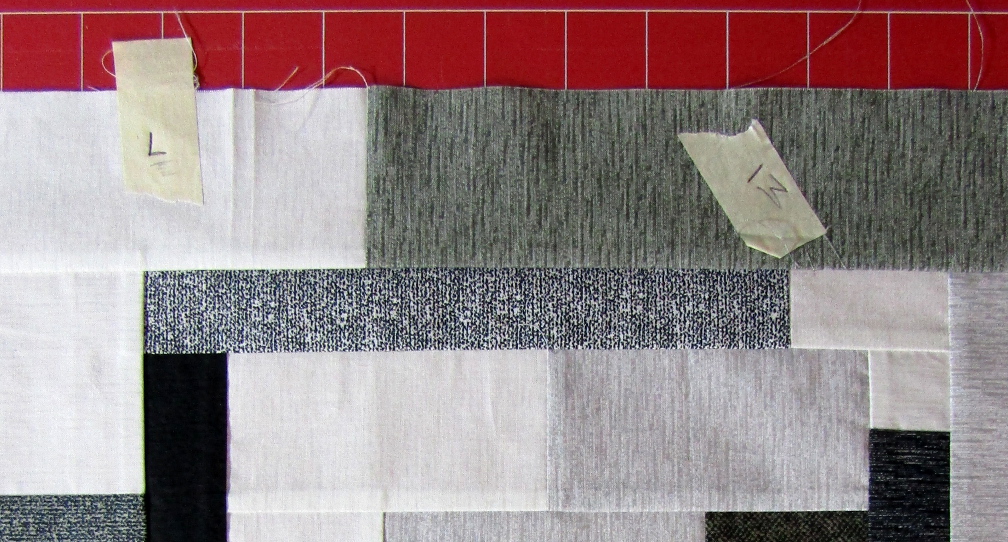
  • Label your pieces yes but just as importantly, to me, is underline *any* letter that could be mistaken for another letter upside down or sideways, this way you know which way is up for that letter. Pictured below is L and M, not 7 and W, or L and W. But *do not* let your masking tape (if that’s what you use) get onto the edge like my L tag here – it will make the fabric fray more than it might be inclined to. ugh! Do as I say not as I do, OK? Back to the letters, I recommend you underline at least H, I, M, N, P, W, Z. Then put sections of your pieces into plastic baggies or something to protect them until you sew with them. I just stacked mine into sections of the alphabet and then bagged each section and labelled the bag.eAntelopeCynLabelling
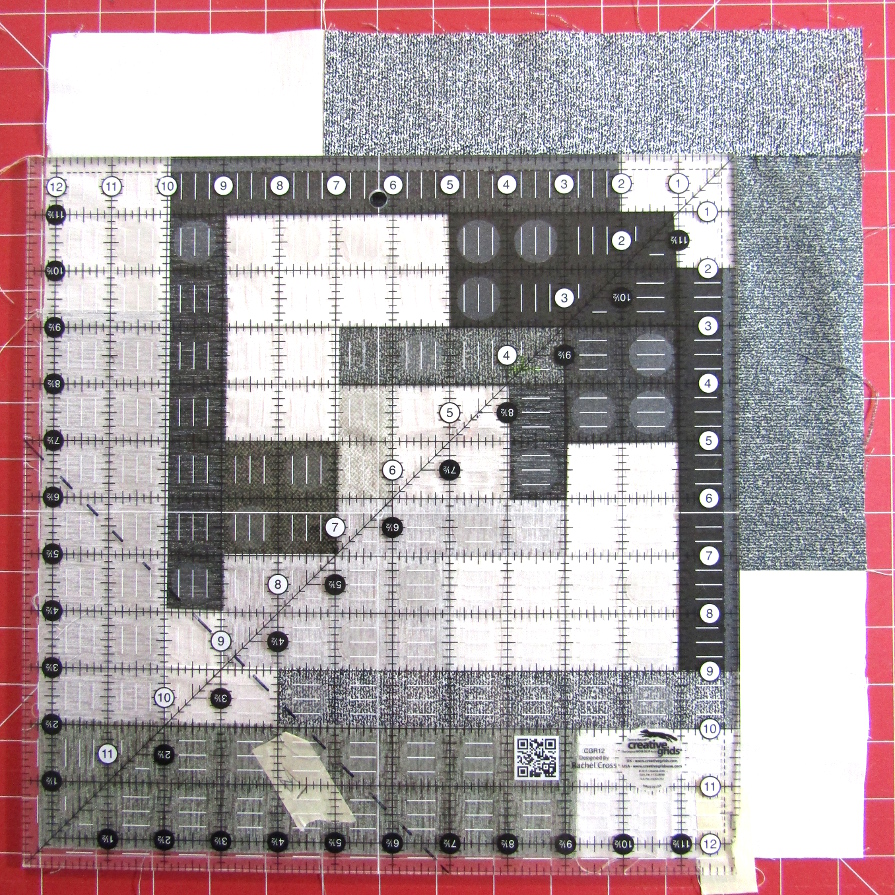
  • Check your blocks regularly. It’s easy math with this one: the strips either finish at 1″ or 2″, so add ’em up and then on the outermost round add 1/2″ for your seam allowance. This way you will catch any BIG stitching errors before they get compounded. Here you can see a 4″ check on the middle of a block:AntelopeCyn4InchCHeck The center square plus the first row are looking pretty good in this one. Then my 10″ check starts showing that my seam allowance was getting too big by a thread or two (which was *weird* because in some patterns my scant 1/4″ is too narrow since I use a 1/4″ blade foot for my Pfaff and then can adjust my needle to make it even a bit more scant):AntelopeCyn10InchCheck I did do some unsewing on the blocks a couple of times.
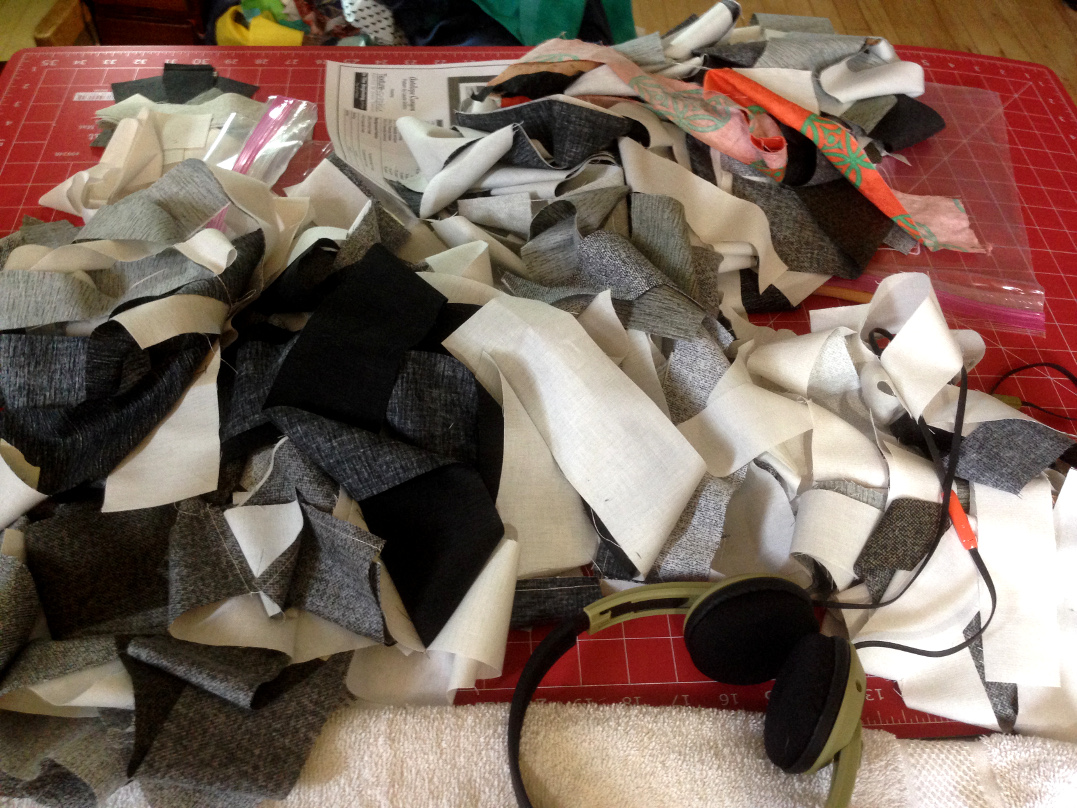
  • Fraying along the way… In my initial pile O’pieces from chain piecing (where I always had my first and last pieces of any given set labelled) you can see that I don’t have much fraying, that’s a pretty good sign that I had the strips squared up decently – or so I thought. PileOPieces Whereas by the time I had my blocks together, I had a fairly hairy back! FrayOnBack Some fabrics are just this way, but also a couple of spots are due to my masking tape hitting the edge. This really isn’t *too* bad (Not like wovens, I love wovens/homespun but talk about fray potential!) but I did try to trim and clean up most of this before giving the flimsy (top) to a long-arm quilter to baste and do some preliminary stitching for me before I do some handquilting. If it really bugs you, you could use some Fray Check on your edges and/or zig-zag baste or serge your edges.
  • Lastly, I did not follow the general instructions to “try to get a good balance of colors and values”. I purposefully tried to get more lights on one side of the block and more dark fabrics on the other. This so far gave me what I see as a little more “movement” on the top:

    AntCynFlimsy
    My Antelope Canyon flimsy

    So does this top look a little more off-balance to you than some other Antelope Canyon quilts? I am hoping to emphasize the “spiral” effect that I see on it with some big stitch quilting.

Tell me if you see what else I did differently than the actual pattern. I will be interested to know who notices!!

(There are still a few kits of this version of the quilt at Gruber’s online store )

I hope this helps some of you out there in the quilting world! Let’s see those Antelope Canyon quilts!

Please visit my pattern shop at https://www.etsy.com/shop/MateriellaDesigns/

Medora and friends

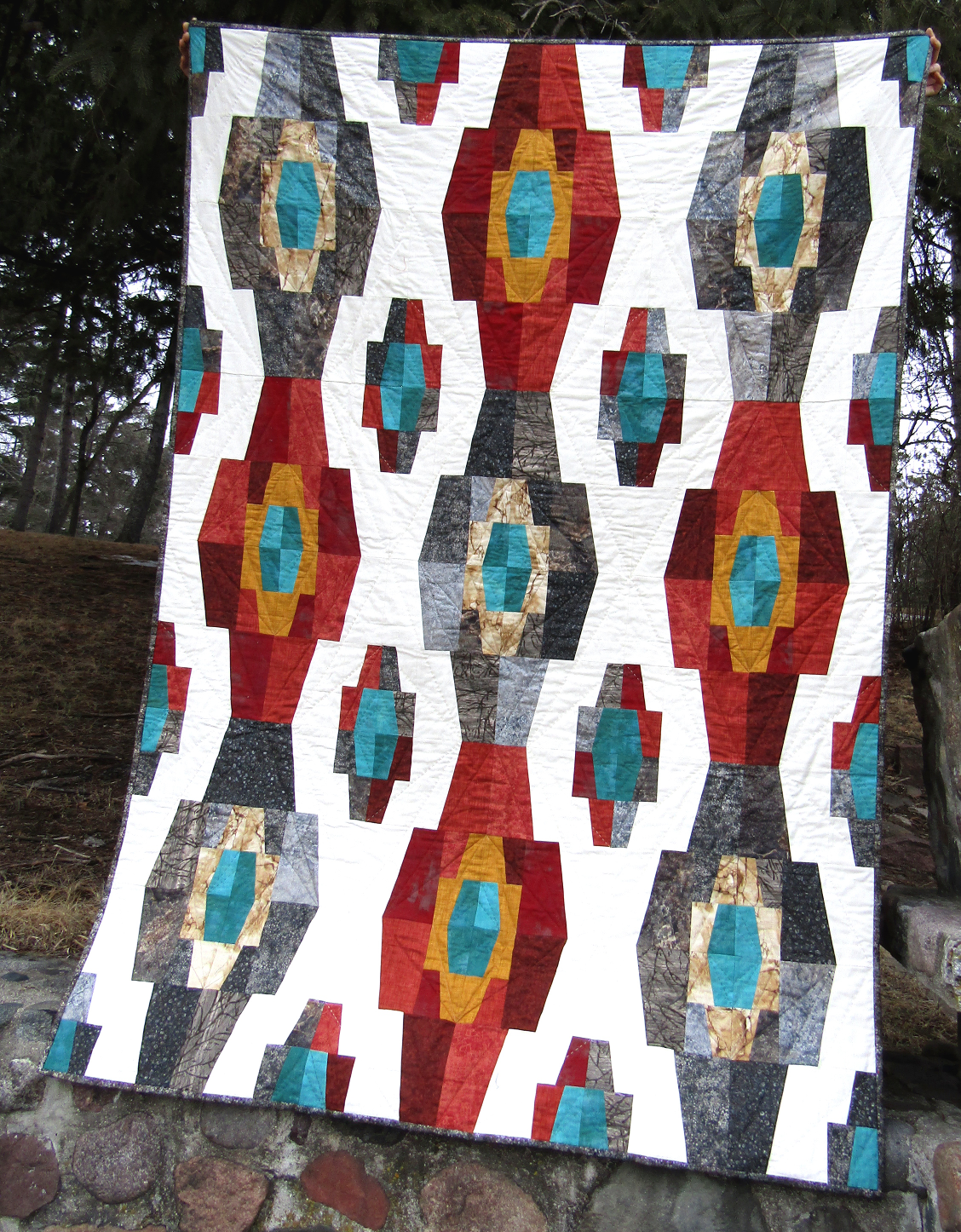
MedoraCover300dp This is my quilt pattern “Medora”. It’s currently written for 2 sizes. I like to play with what I think is a greatly underutilized quilter’s tool for all the things it can do: the Straight Out of Line ruler from Creative Grids (CGRKA3).  It can do basic wedge shapes starting with squares in sizes from 10″ down to 4″, plus it does a “paddle wheel” shape which is basically a twister type block without cutting away so much fabric, and it also does an “optical illusion” cut that is super fun and I have some more plans for that too. Truly the best thing about the tool is teaching it and showing other quilters the many, many blocks you can do with it!
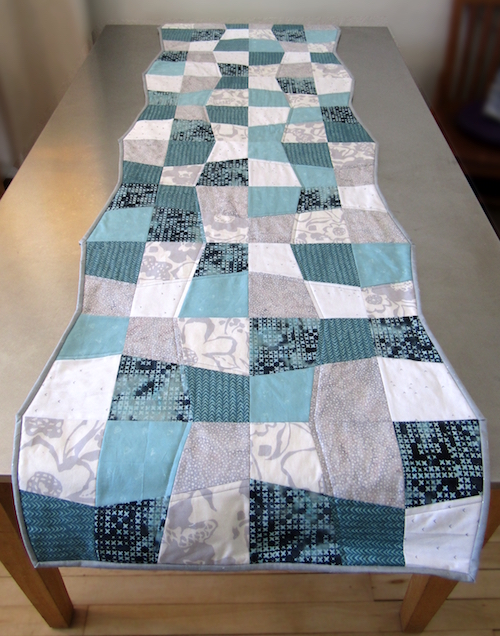
I made a runner pattern with it using the optical illusion cut, Flexible Floe:

FlexibleFloe

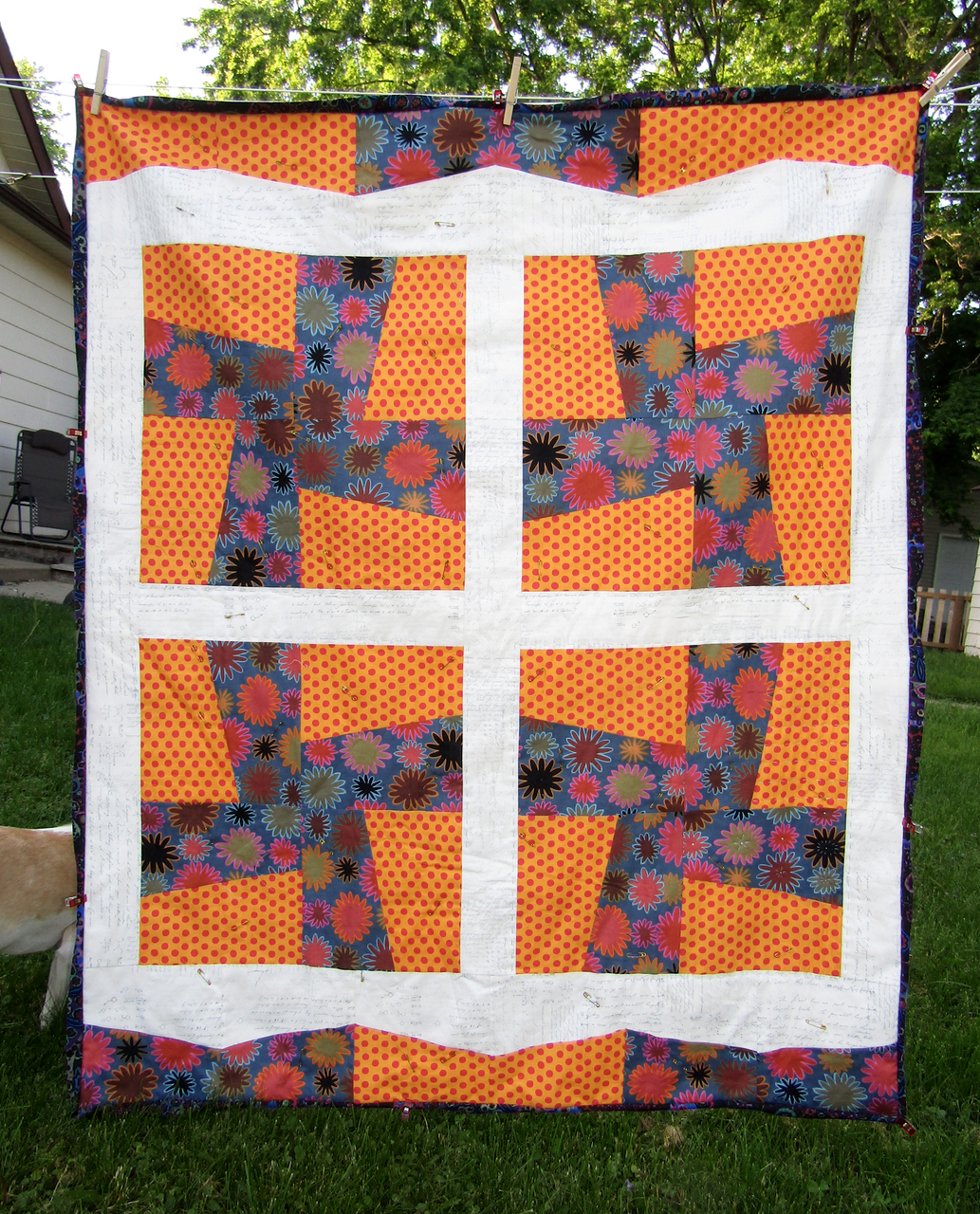
…and of course I had to do fun wonky pinwheel quilts with wonky borders:

IMG_0305.jpg

I called it “Twurtle”:

Twurtle

If you like them, you can get any of the patterns by emailing me at jill (at) materiella.com and the ruler by purchasing it from your Local Quilt Shop.

This next pattern is “Paddle Wheel” from Cut Loose Press and you get a really gorgeous result with neutral and blue batiks:

PaddleWheel

As I get back up to speed on WordPress (it’s been a few years for me), I will get more info and links up. Hope you have a lovely weekend – here it will be snowing which means a lot of sewing.